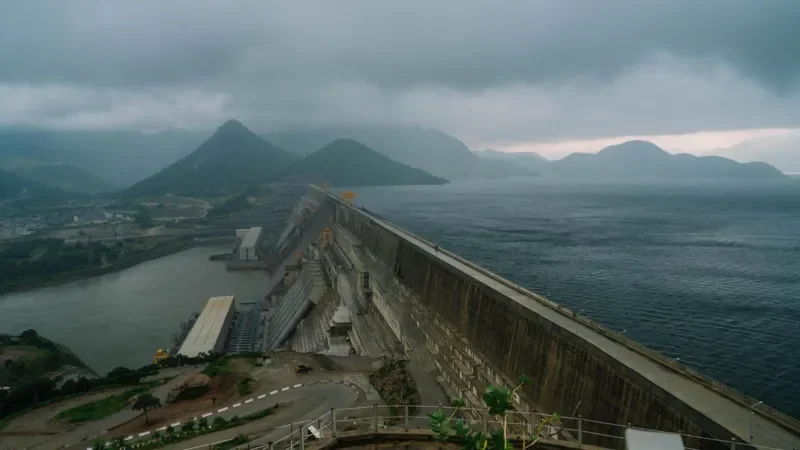
ADDIS ABABA – Ethiopia will officially inaugurate Africa’s largest hydroelectric dam along the Blue Nile on Tuesday, a project that will provide energy to millions of Ethiopians while deepening a rift with downstream Egypt that has unsettled the region.
The continent’s second most populous nation with a population of 120 million, sees the $5 billion Grand Ethiopian Renaissance Dam (GERD) on a tributary of the River Nile as central to its ambitions for economic development.
Launched in 2011, the dam’s power generation should eventually rise to 5,150 MW from the 750 MW that its two active turbines are already producing.
Prime Minister Abiy Ahmed has said Ethiopia will use the energy to improve Ethiopians’ access to electricity while also exporting surplus power to the region.
Addis Ababa is planning to increase the sale of electricity to neighboring Kenya and Djibouti, with ambitions of building a transmission network to cross the Red Sea to sell to Middle Eastern states like Saudi Arabia.
Egypt and Sudan’s opposition to the dam
For Egypt and Sudan, the dam represents the opposite of Ethiopia’s hopes and ambitions. They fear that dam could sharply reduce the flow of water to the country, causing water shortages.
In a joint statement last week, Egypt and Sudan said the dam “breached international law and would cause grave consequences to the two downstream countries.”
Both nations have said they now consider water security a national security concern.
The Blue Nile flows from Ethiopia to Khartoum, Sudan’s capital, where it joins the White Nile before flowing into Egypt as the Nile. The Blue Nile, in which the dam was built, supplies more than 80% of the water for the combined river system.
Egypt’s government, noting that more than 90% of the country is desert, has said most of its population lives along the Nile, and it has raised concern for years that the dam will reduce water flow and cause shortages — and officials have warned they will take measures in response if that happens.
“Anyone who imagines that Egypt will turn a blind eye to an existential threat to its water security is mistaken,” Egyptian leader Abdel Fattah El-Sisi said in August, calling it a potential “existential” threat to his country.
“We will continue to monitor the situation and take all measures provided for under international law to safeguard our people’s existential resources,” El-Sisi said.
Ethiopian Prime Minister Abiy Ahmed has been widely quoted as saying the dam will benefit everyone in the region, through power purchase agreements and flood control.
Some information in this story was obtained from the CBS and France 24 news agencies

