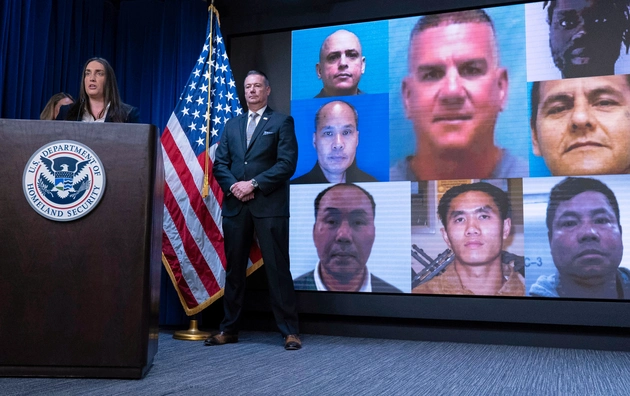
WASHINGTON DC – A lawyer for one of the eight migrants deported from the United States to South Sudan on July 4, says the Trump administration is likely to expand the sending of migrants to foreign countries.
The eight men including Vietnamese, Cubans, Laotians, Mexicans and one South Sudanese had spent weeks at a military detention facility in Djibouti, pending an appeal against a court order suspending the deportation.
Following the Supreme Court’s ruling that the South Sudan deportations are legally binding, a plane carrying the men deemed “worst of the worst” by US immigration authorities because of their criminal records, arrived in Juba on a Friday night.
But since then, lawyers representing the deportees say their fate remains unclear.
Juba said they were “under the care of the relevant authorities,” in a statement days later, but disclosed no information about their where about their whereabouts or what fate awaits them.
Last week, U.S. Immigration and Customs Enforcement issued new internal guidance that could help accelerate third-country deportations, Kansas City Star reported.
The guidance said when a country has provided “credible diplomatic assurances” that deportees will not be subjected to torture or persecution, deportations can proceed without delay.
“Because the Supreme Court let them do this, I think they’re now feeling emboldened to do it on a more widespread scale,” said Trina Realmuto, a lawyer representing the migrants sent to South Sudan, in an interview with local media.
She added that the lack of information about the eight men “creates fear” and puts their family members “in an untenable position.”
Human rights concern
A human rights activist says the deportation of foreign nationals to South Sudan against their will violates the country’s obligation to international humanitarian law.
Victor Bulla was commenting on the deportation of seven foreign nationals, including Vietnamese, Cubans, Laos and Mexico over a week ago.
These said the deportees did not consent to being sent here and will face challenges integrating into the local population due to language and cultural barriers.
He acknowledges that the government is obligated to conduct bilateral deals with other nations.
Bulla however points out that doing so at the expense of third country citizens, is against the international humanitarian standards that South Sudan is a party to.
“This arrangement, it is in violation of the basic human rights of those other nationals who are not South Sudanese. We have Cubans, Vietnamese, are that one South Sudanese national? They are not. So transferring them to their country is to have them reintegrated into the society.
“You are bringing Vietnamese here. In which society are those Vietnamese or those other foreign countries are going to get reintegrated in what society? First, we have language barrier. Our culture is not the same as the culture of these people. The bilateral agreement for thought of meeting international standard procedures.”

