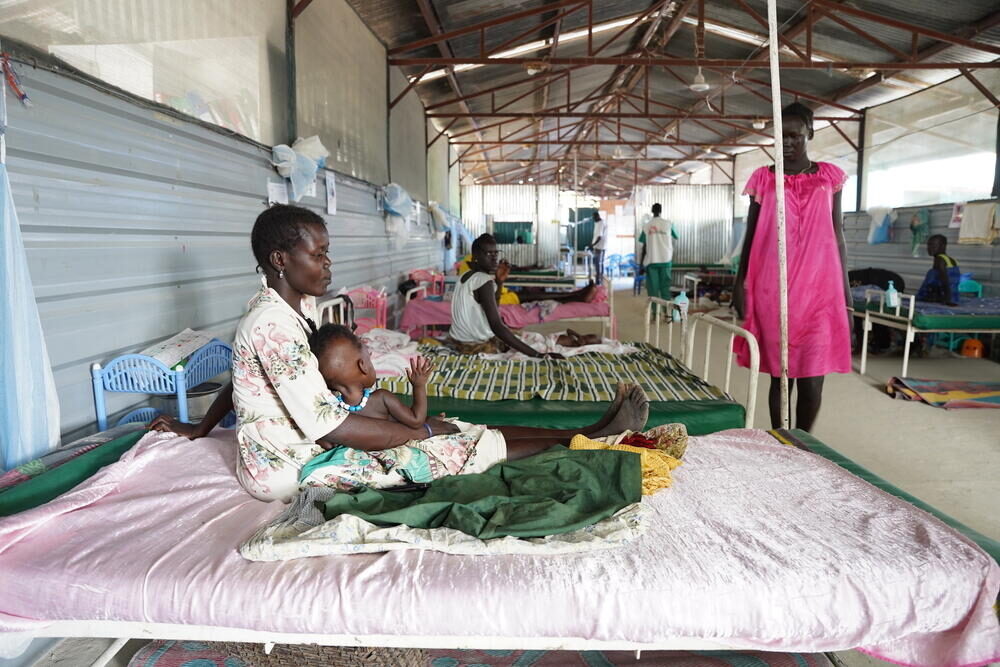
JUBA – People in South Sudan are facing a rapidly worsening humanitarian crisis as violence intensifies and international support continues to decline, according to a new report by Médecins Sans Frontières (MSF).
The report, Left Behind in Crisis: Escalating Violence and Healthcare Collapse in South Sudan, draws on medical data and testimonies from patients, caregivers, and healthcare workers in areas where MSF operates. It documents the human cost of a fragile health system strained by conflict, displacement, and chronic underfunding.
“South Sudan’s health system is stretched to breaking point,” said Dr Sigrid Lamberg, MSF’s head of field operations in the country. “In every location where MSF works, we see huge gaps in health services.”
MSF reports that many health facilities are either non-functional or severely under-resourced, with persistent shortages of medicines and staff leading to preventable deaths. Ongoing violence, including attacks on healthcare facilities, is further restricting access to care.
According to the United Nations, renewed fighting between government forces, opposition groups, and non-state armed actors has displaced more than 320,000 people since January, with at least 2,000 killed. In Malakal alone, MSF treated 141 trauma patients between April and November, including women and children with gunshot wounds.
The report highlights a sharp rise in attacks on healthcare facilities in 2025, which MSF says violate international humanitarian law. MSF experienced eight targeted attacks on its facilities and staff in Central Equatoria, Jonglei, and Upper Nile states, forcing the closure of hospitals in Ulang and Old Fangak. On 3 December, an MSF facility in Pieri, Jonglei state, was hit by an airstrike, with additional strikes reported the same day in Lankien, where MSF also operates health services.
Communities across the country are grappling with overlapping crises, including conflict, mass displacement, flooding, malnutrition, and disease outbreaks. South Sudan is currently facing the largest cholera outbreak in its history, while malaria remains the leading cause of illness and death, particularly among women and children.
Despite these challenges, international support declined further in 2025. The Health Sector Transformation Project, launched in July 2024 and led by the government with support from international partners, was initially intended to support 1,158 health facilities nationwide. Funding shortfalls mean only 816 facilities are currently covered, many of which still lack essential medicines and staff.
For the second consecutive year, nationwide stockouts of malaria drugs were reported during peak transmission season. Between January and September 2025, MSF treated 6,680 patients with severe malaria requiring hospitalisation.
MSF is calling on international donors to urgently renew their commitments and address shortcomings in existing health programmes. The organisation also urged the South Sudanese government to increase health spending in line with the Abuja Declaration, which recommends allocating 15 per cent of the national budget to health. Currently, health receives just 1.3 per cent of the national budget.
“The situation in the country is catastrophic,” Lamberg said. “Urgent and coordinated action is needed. The world cannot look away from South Sudan, especially not now.”

