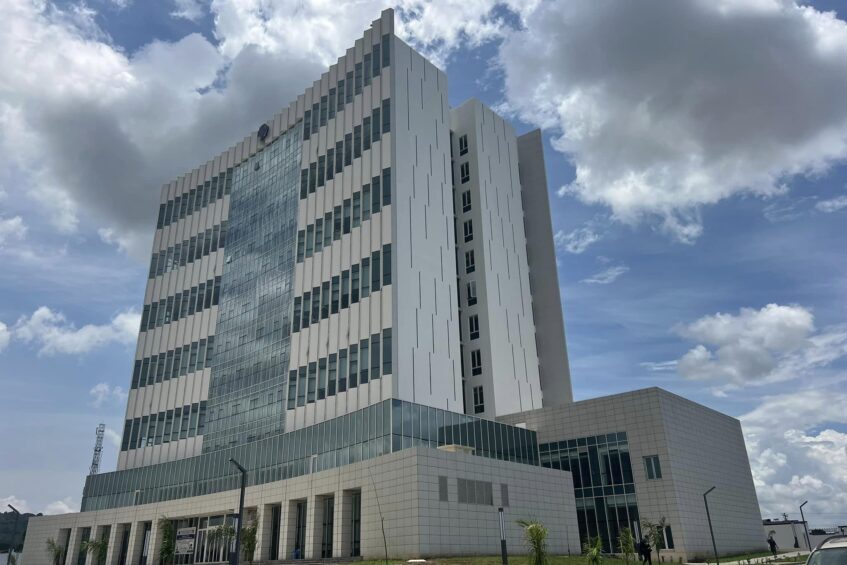
JUBA — The Bank of South Sudan urged a federal court in Washington, D.C., on Friday not to enforce a $1 billion arbitral award in favor of Qatar National Bank, arguing that the tribunal which issued the award lacked jurisdiction because the dispute was effectively between two sovereign states.
In a filing opposing enforcement of the award, the Bank of South Sudan contended that the International Centre for Settlement of Investment Disputes (ICSID) did not have authority to hear the case because Qatar National Bank is controlled by the State of Qatar. The Qatar Investment Authority owns at least 50% of the bank’s shares, the South Sudanese central bank said, rendering Qatar National Bank a state-controlled entity.
Qatar National Bank has argued that the D.C. court may not revisit the ICSID tribunal’s jurisdictional findings. The Bank of South Sudan rejected that position, asserting that such deference applies only when jurisdictional issues have been “fully and fairly litigated and finally decided.”
“As recently as 2023, this Circuit made clear that challenges to the jurisdiction of the first forum are entitled to full faith and credit only if those questions have been fully and fairly litigated and finally decided in the forum which rendered the original determination,” the bank said in its brief.
According to the Bank of South Sudan, that standard was not met during the arbitration proceedings.
The Sudanese central bank also argued that summary judgment is inappropriate due to alleged corruption involving Qatar National Bank and the Qatar Investment Authority “at the highest levels.” It said the court should permit discovery into publicly disclosed criminal convictions and allegations of financial misconduct before enforcing the award.
“The protection of the integrity of U.S. federal courts mandates that each district court assess the possible taint of material corruption before it allows the prestige of the American federal courts to be utilized to enforce a corrupt bargain against American and international public policy,” the bank said.
Qatar National Bank began its relationship with South Sudan shortly after the country gained independence in 2011, according to the bank’s petition. It agreed to provide credit facilities to finance essential imports, including food, agricultural products, pharmaceuticals, construction materials, and refined oil products.
After civil war erupted in late 2013 and sharply reduced South Sudan’s oil output, Qatar National Bank extended an additional $250 million credit facility, according to the final arbitral award.
The Bank of South Sudan defaulted on its payment obligations in May 2015, prompting a restructuring agreement in February 2016. The parties later entered into another agreement in April 2018 that refinanced prior obligations and provided a $700 million term loan to be repaid over 15 years.
The funds were intended to refinance development-related imports and support South Sudan’s balance-of-payments management, according to the petition.
Qatar National Bank initiated arbitration in 2020 after South Sudan failed to make scheduled payments in 2019. In January 2024, a three-member ICSID tribunal found South Sudan liable for breaching the 2018 agreement and ruled that Qatar National Bank was entitled to immediate repayment of outstanding sums. The tribunal issued a damages award in May 2024 totaling approximately $1 billion.
Counsel for the parties did not immediately respond to requests for comment Monday.
Qatar National Bank is represented by Floriane Lavaud, Jovana Crncevic, and Alexander Haden of Withers. The Bank of South Sudan is represented by Philip M. Musolino of Musolino & Dessel PLLC.
The case is Qatar National Bank (Q.P.S.C.) v. The Republic of South Sudan et al., Case No. 1:25-cv-01870, in the U.S. District Court for the District of Columbia.
Additional source: Law360

