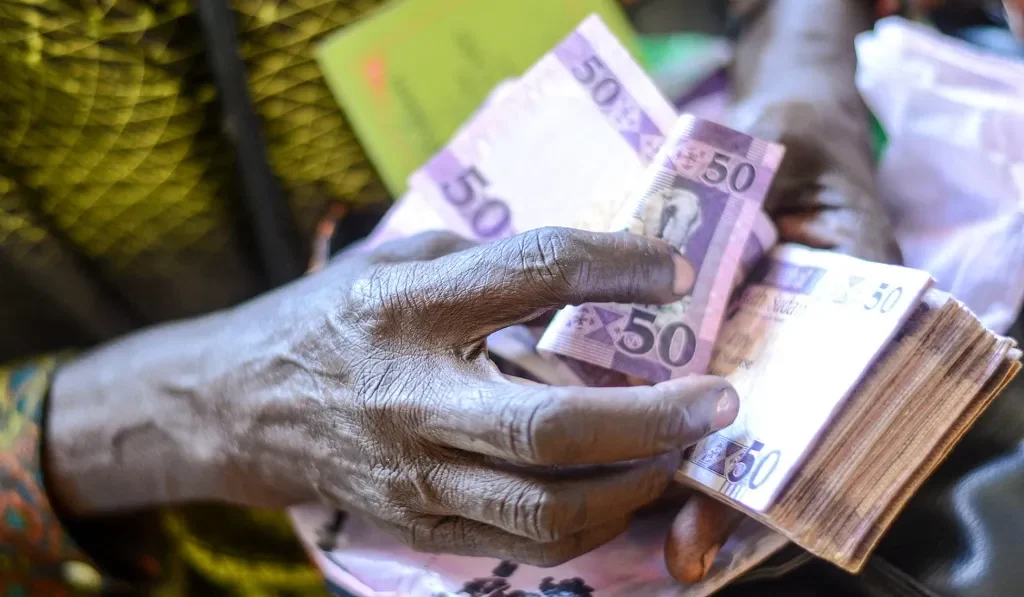
JUBA — South Sudan was ranked as Africa’s most inflation-hit economy in 2025 at 97% according to the International Monetary Fund’s projections, as the rapid pound depreciation continued to erode purchasing power and push basic living costs beyond the reach of millions.
Despite a gradual easing of global inflationary pressures, South Sudan’s economic reality moved in the opposite direction, according to IMF.
The local currency remained highly volatile, driven by chronic foreign exchange shortages, weak oil revenues, fiscal pressures, and heavy dependence on imports. As a result, prices of food, fuel, and essential goods surged, reinforcing the country’s position at the top of Africa’s inflation list.
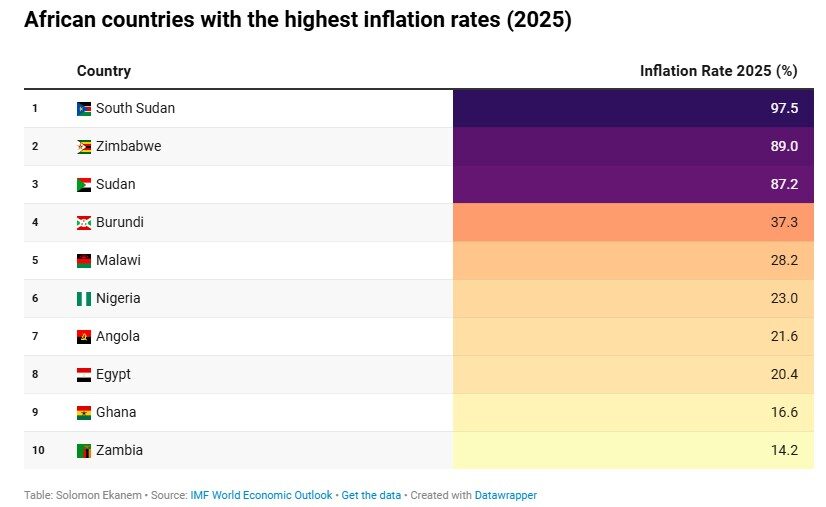
The inflation crisis in South Sudan stands in stark contrast to developments in several other African economies. Countries such as Nigeria, Angola, Egypt, Ghana, and Zambia also recorded elevated inflation levels in 2025, but at comparatively lower rates.
In these economies, inflation was largely influenced by foreign exchange volatility, debt servicing costs, and structural bottlenecks, including energy constraints and supply-chain disruptions. However, stronger monetary policy tools and relatively deeper foreign exchange markets helped prevent runaway price growth.
In South Sudan, currency weakness remains the central driver of inflation. The limited availability of foreign currency has widened the gap between official and parallel market exchange rates, raising import costs and fuelling price instability across the economy. With the country importing most of its food and consumer goods, fluctuations in the exchange rate are quickly transmitted to retail prices.
Economic analysts warn that without urgent measures to stabilise the currency, inflationary pressures are likely to persist. Beyond macroeconomic indicators, the crisis is increasingly felt at the household level, where rising prices have reduced access to food, healthcare, and education, intensifying humanitarian concerns.
Across Africa, the inflation picture in 2025 reveals a continent divided. While some economies are beginning to benefit from softer global inflation and tighter domestic policies, others—particularly fragile states with weak currencies—continue to struggle.

