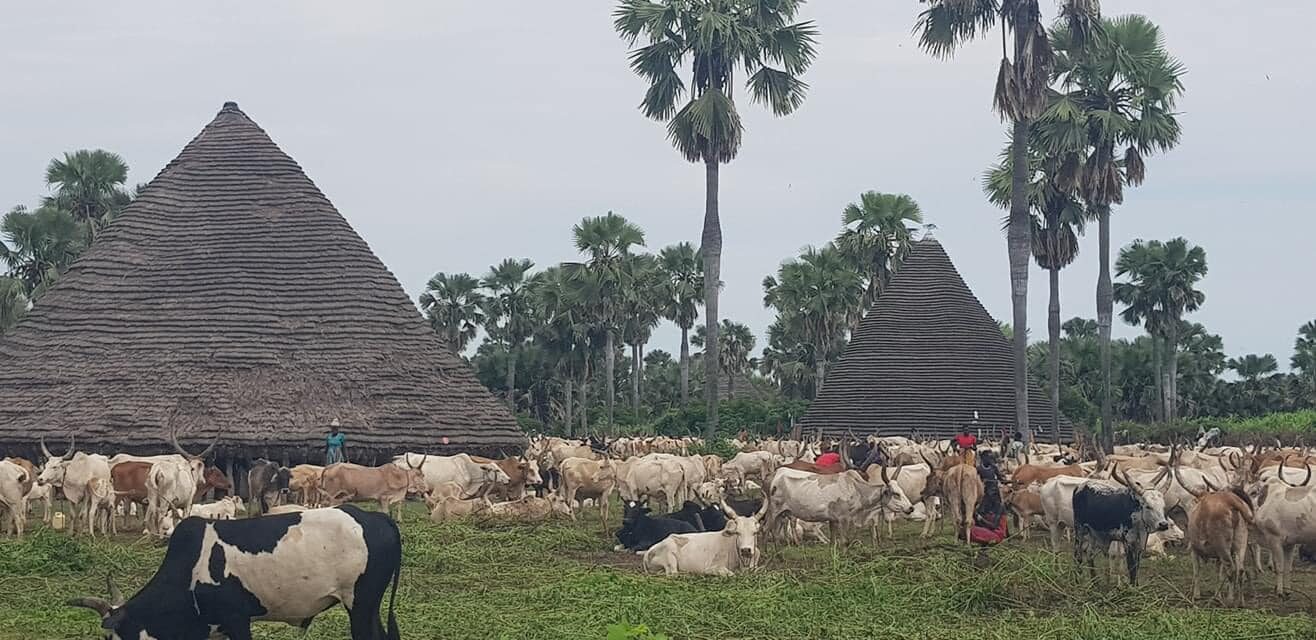
WARRAP – South Sudanese online have called on the government to intervene after two men died from stomach complications during painstaking fattening competition in Warrap State, in August alone.
Bak Wol Agor succumbed on Thursday at the Majok-tong cattle camp while participating in the traditional fattening season, marking another tragedy in a series of similar incidents in the area.
“Since death is a disadvantage in the competition then what could be the advantage of it?” asked David Thiep.
“It is indeed disheartening. While culture is a cornerstone of any society, it is wise to promote and uphold practices, while those that may be detrimental should be addressed by community leaders and policymakers,” said Merhawi Jacob.
“We should encourage and preserve good customs and traditions…the harmful or fatal practices of culture and traditions should be modified or stopped once for all,” commented Godwin Osuhayo.
Second death in a month
On 20th August, a 28-year-old man tragically died of during a similar traditional fattening occasion in Gogrial East County in Warrap. Mayol Akeer, the son of Manyiel Deng from Kuac Ayok Community reportedly died at Ayok cattle camp on August 20th, 2025.
Akeer was then declared the winner in accordance with tradition, a community radio reported. By custom, he would automatically be the winner for two years, and his legacy will be remembered in the community. However, it is unclear if the latest victim will also be a winner.
In the Dinka (Jieng) tradition, unmarried men drink cows milk and avoid movement for long periods of time before finally meeting to see who is the fattest.
The purpose of this contest is to make themselves attractive to women who can see the wealth and productivity of the man’s cattle herd through his girth.
The fattening season usually occurs in the dry season until June or later, when the herds are moved to the swamplands and riverine areas known as the toich to graze on rich grasses and other forage.
This period of ample food and water in the wetlands allows the cattle to gain weight and health before the onset of the rainy season, which is crucial for the Dinka’s economy and cultural practices.

