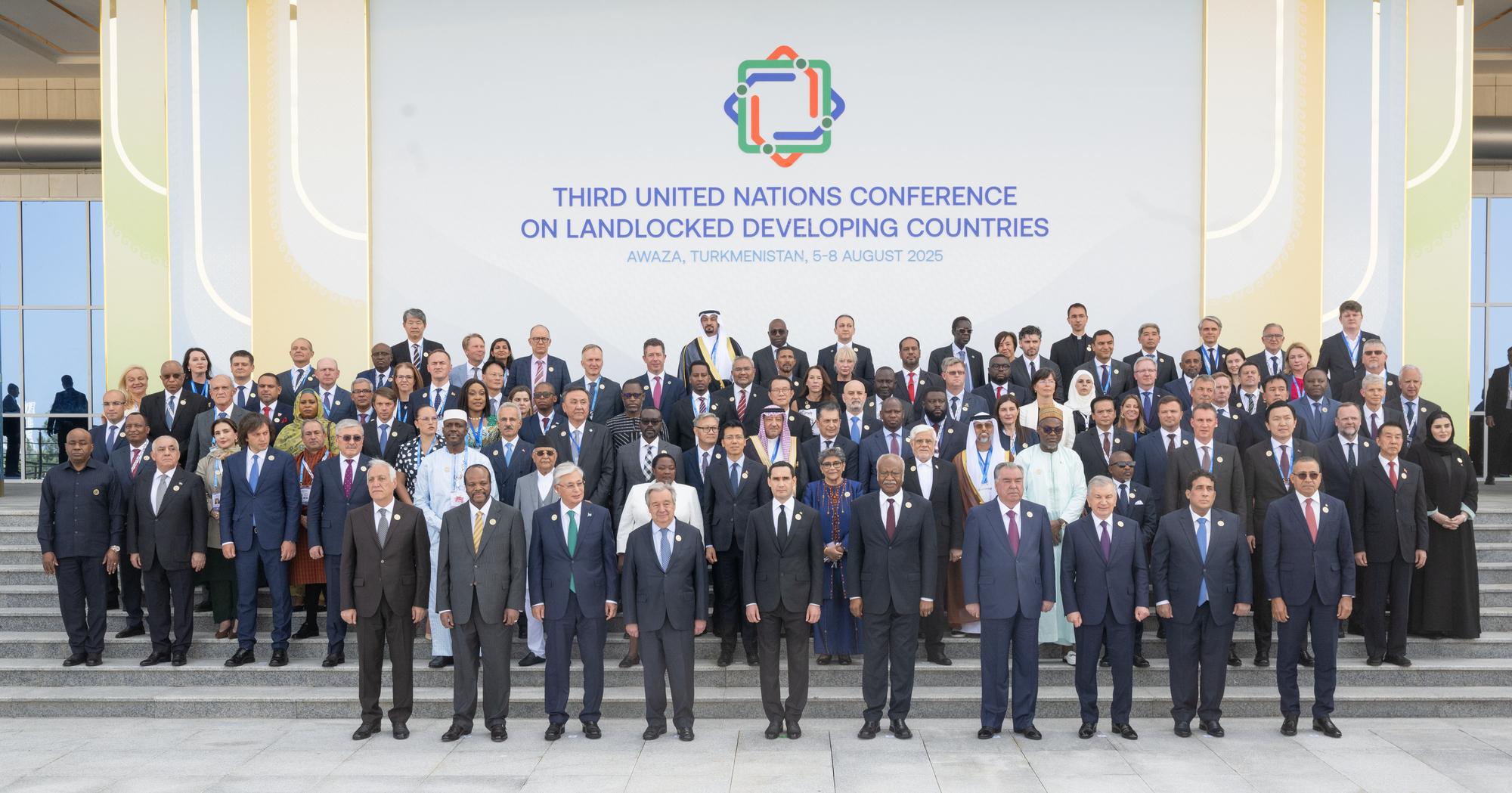
TURKMENISTAN—South Sudan lamented the challenges of underdeveloped transport networks during the ongoing United Nations Conference of the Landlocked Developing Countries (LLDC) in Awaza, Turkmenistan, urging concessional loans and climate resilience funds.
Addressing the sparsely attended conference, the country’s envoy to the UN, Cecilia Adeng, underscored that South Sudan faces enormous setbacks, including conflicts, climate disasters, limited infrastructure, and connectivity.
The landlocked East African nation is bordered by Sudan, Ethiopia, Kenya, Uganda, the Democratic Republic of the Congo, and the Central African Republic.
This leaves it with significant trade barriers due to higher transportation costs and increased reliance on neighboring Uganda and Kenya for access to the global market. Besides, South Sudan has underdeveloped internal road networks—with the north almost entirely inaccessible in the rainy season due to floods.
Adeng said the country remains committed to leveraging regional integration and international cooperation to accelerate progress in sustainable development.
She further stressed that bridging the infrastructural gap is not optional, encouraging development partners and multilateral financial institutions to provide climate resilience finances and lend favorable loans.
“We urge the developing partners and multilateral banks to increase consensual financing and risk guarantees that support transformative infrastructural projects.”
“As a country in the frontline of climate crisis, we call for scaled-up climate finances, adaptation support, and early warning systems tailored towards the LLDC context.”
The conference concluded today, August 8, the adoption of the Awaza Political Declaration, and the formal endorsement of the Awaza Programme of Action (2024–2034)—a landmark framework to accelerate sustainable development and resilience for the world’s 32 landlocked nations.
The four-day conference convened Heads of State, Senior UN officials, development partners, and private sector leaders to address the unique challenges faced by LLDCs—including high trade costs, infrastructure gaps, and climate vulnerabilities—while charting a bold path forward through the Awaza Programme of Action (2024–2034).

