JUBA – The United Nations World Food Programme (WFP) said on Tuesday a severe funding shortfall threatens ongoing humanitarian response in South Sudan, placing millions at risk of losing food assistance.
In a press release, WFP disclosed that it has reached over two million people with life-saving assistance in South Sudan so far this year.
“The scale of the humanitarian needs in South Sudan is staggering. But the scale of suffering here does not make headlines,” said WFP Deputy Executive Director and Chief Operating Officer, Carl Skau, who visited South Sudan on 17-20 July.
According to the latest food security update, 7.7 million are facing severe hunger in South Sudan, out of which 83,000 are facing catastrophic levels of hunger (IPC5) – the highest classification of food insecurity.
Those facing the highest classification of food insecurity include 32,000 people in Upper Nile State where fierce fighting since March has displaced thousands and severely limited humanitarian access.
The agency said Nasir and Ulang counties in Upper Nile are at risk of deteriorating into famine.
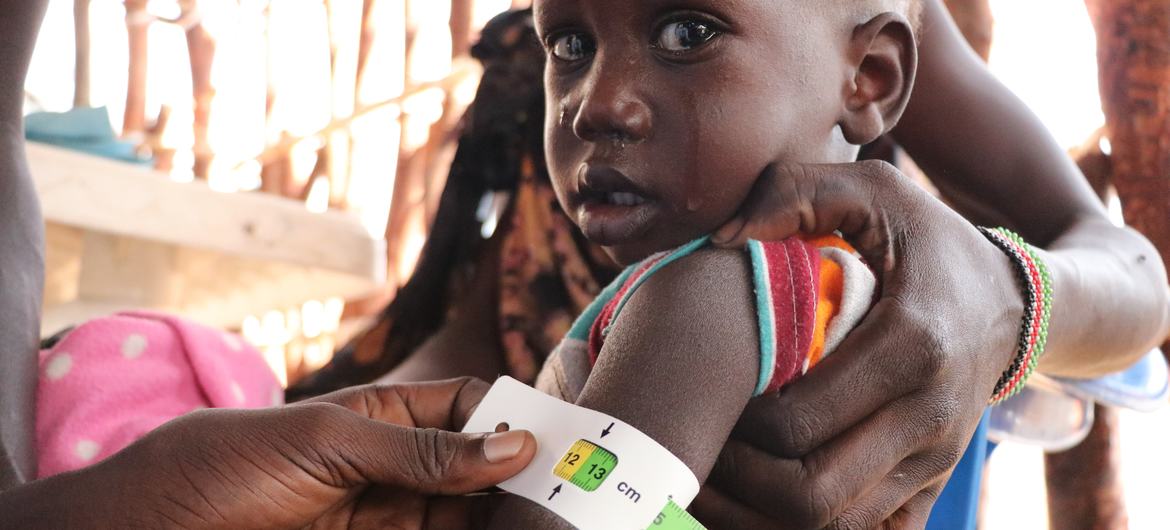
Meanwhile, 39,000 who have returned to South Sudan fleeing conflict in Sudan also face starvation, as well as a record 2.3 million children who are at-risk of malnutrition, mainly in Upper Nile and Bentiu, Unity State.
“Whether its families trapped every year by flooding in Unity state or others trapped by conflict in Upper Nile state – millions of mothers, fathers, and children spend each day fighting hunger to survive,” Skau added.
WFP said it has supported two million of the most vulnerable people in South Sudan this year, including over 300,000 impacted by the escalation of conflict in Upper Nile.
In July, WFP conducted airdrops to access the most remote parts of the Greater Upper Nile region, including areas at risk of famine. To date, we have delivered 430 metric tons of food, and airdrops are ongoing to reach 40,000 people.
Vital river convoys on the White Nile River have resumed after access was granted for the first time in months due to fighting.
On 16 July, a river convoy carrying 1,380 mt of life-saving food assistance from WFP and other non-food items transported on behalf of the humanitarian community, departed Bor destined for Upper Nile state.
However, severe funding shortfalls mean WFP can reach just 2.5 million people – only 30 percent of people facing severe hunger – across the country with emergency food assistance.
WFP urgently requires US$274 million to maintain support for just the 2.5 million most acutely food insecure through the end of the year – providing only 50 percent rations to these communities in most cases.
Further reductions in rations and assistance will be necessary in September if additional funds are not urgently received.
Limiting food aid to the most vulnerable families risks undoing recent fragile gains.

